I am a retired Olympian, a two-time CrossFit Games Team athlete, and a personal trainer with over 17 years in the wellness industry. My dedication to elite sport not only shaped my mindset but also blessed me with a strong, athletic body that I loved and admired. I looked and felt like Wonder Woman—it was my identity, my armor, my pride. Then, I had my two children.
After weaning my second child at 15 months, I realized something was wrong. I didn’t feel like myself. I felt dead inside—exhausted, irritable, and emotionally numb. Workouts that once fueled me now drained me completely, leaving me needing naps just to recover. I eventually stopped going to the gym for over a year. I felt broken, defeated, and unmotivated. My body no longer felt like my own, and I questioned everything about my life. I asked myself, “Where did it all go wrong?”
But let me start at the beginning. I’ve been an athlete for as long as I can remember. I’m the youngest of five girls, and we were all in gymnastics at a very young age. I also played soccer and ran track in high school. After high school, I walked onto the University of Connecticut track team, where I discovered hammer throwing. I became a two-time All-American and even qualified for the Olympic Trials in 2000. Pursuing the dream of becoming an Olympian for eight years was intimidating—I never felt talented enough—but I loved the challenge. I loved training, being coachable, and pushing my body to its limits to discover what it could truly do. It never ceased to amaze me.
I graduated with a degree in athletic training and started working for a physical therapist, who also worked with the US Bobsled Team. One day, he said, “With your power and strength, you’d be great at pushing bobsleds!” Skeptical but curious, I traveled to Lake Placid, learned to push a sled on wheels, and qualified for the World Cup Tour. That same year, I competed at the Olympic Trials. By 2006, I had made the US Olympic Bobsled Team. My career ended in 2009 when I ruptured my Achilles while training for the Vancouver Games—a devastating blow to both body and identity.
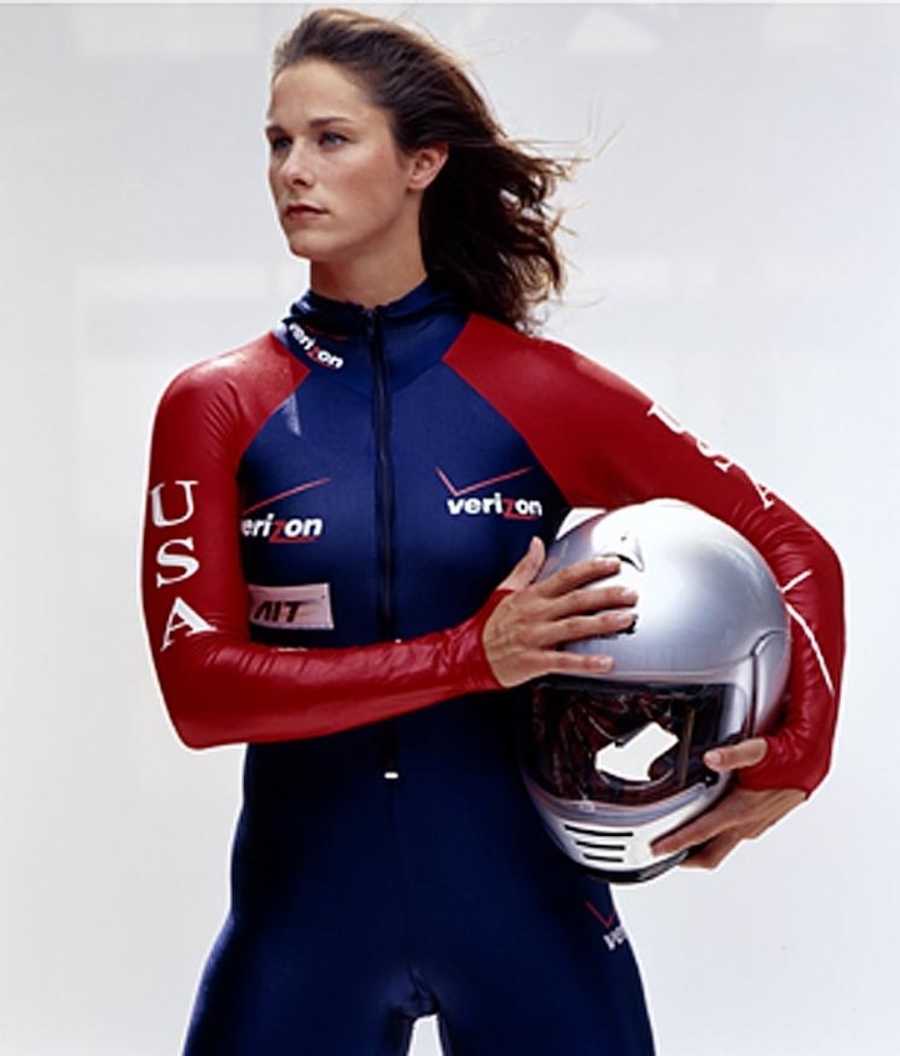
In both hammer throwing and bobsled, being heavier was advantageous. I spent years eating constantly, strength training five days a week, sprinting two to three days a week, tossing hammers or pushing sleds four to five days a week, and even seeing personal training clients in my spare time. I trained 20–30 hours a week, fueled by protein bars, shakes, and relentless determination. My body was thick, muscular, strong—and I loved every second of it. I squatted 350 pounds, clean-and-jerked 225, and bench-pressed 225, and I felt unstoppable.
Yet, as any athlete knows, ending a career on an injury is heartbreaking. That moment in 2009 when my Achilles ruptured shattered my identity. I returned to “normal” life, trying to piece together who I was outside of elite sport.
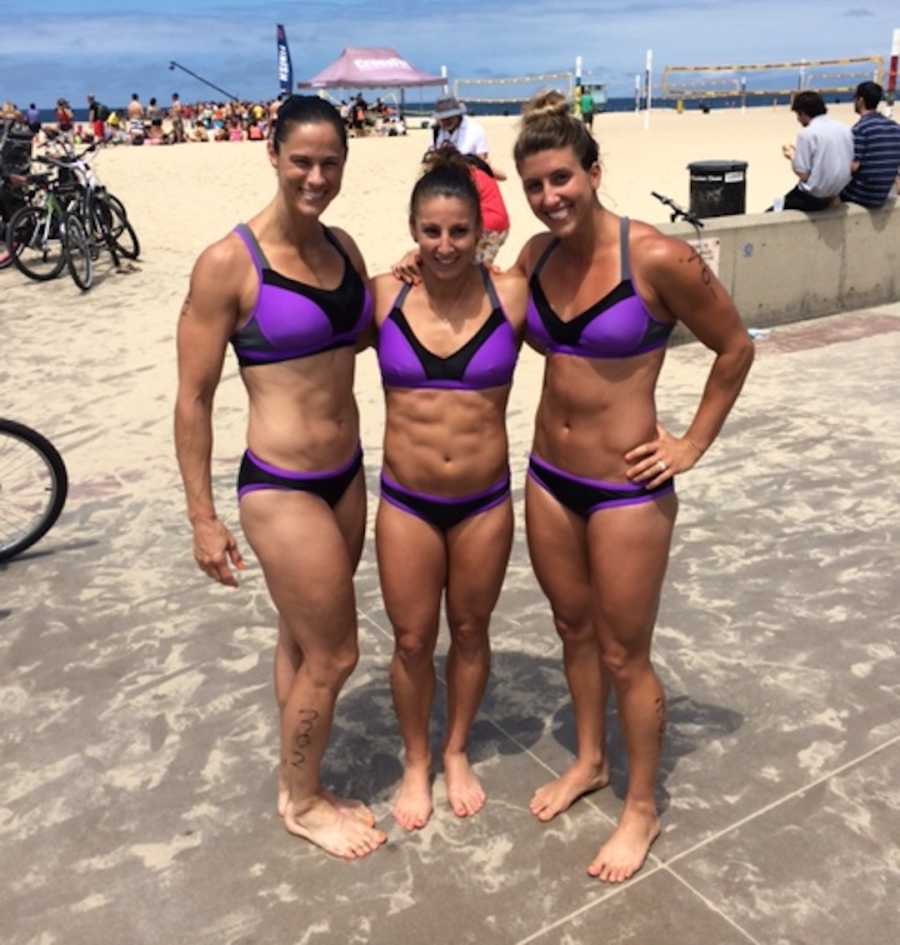
A few years later, in 2012, I found CrossFit, and my competitive fire returned. The combination of weightlifting and metabolic conditioning sculpted my leanest, strongest body ever. I loved pushing through the pain, grinding workouts, and achieving feats I never thought possible. My team placed second at the CrossFit Games in 2013, and for the first time in years, I felt alive again.
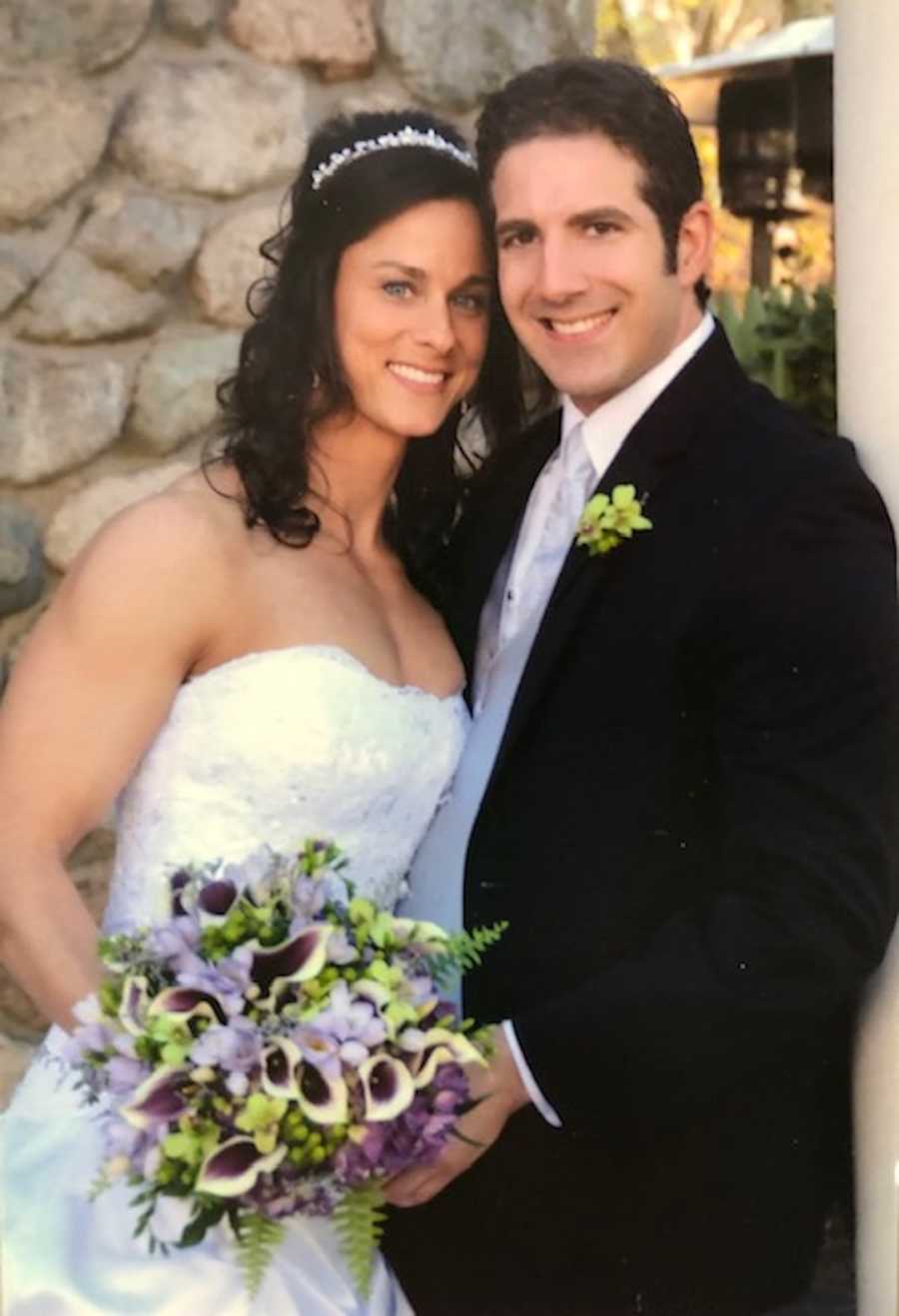
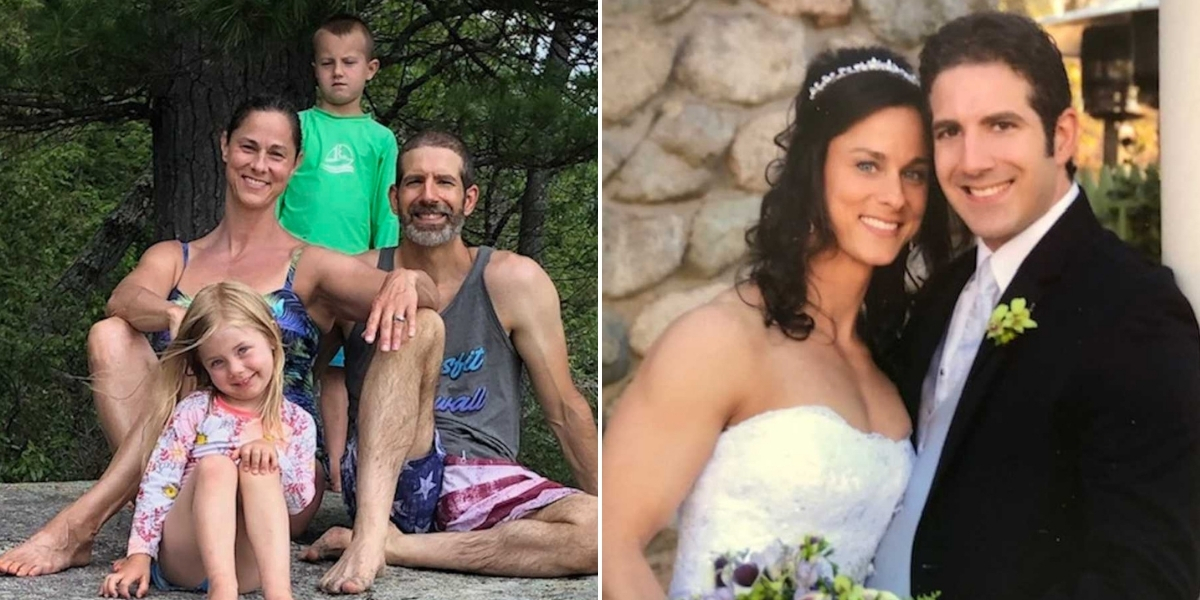
That same year, I met my husband, Tom. Relationships had always taken a backseat to my athletic goals, but in my mid-30s, I was ready. We fell fast and hard, married in 2013, and soon had our son in 2014. By 2015, we bought our first house, I regained my pre-baby fitness for another CrossFit Games, and then we welcomed our daughter. Life was full, vibrant, and exciting—we were riding high.
Then, slowly, things began to unravel. My pregnancies were smooth, but postpartum life proved far more challenging. As a self-employed trainer, I didn’t get maternity leave. My babies went to daycare at six weeks, while I juggled nursing, pumping, running the household, working, and attempting to maintain my fitness. I thought I was managing, but my body and mind were quietly burning out.
By fall 2017, after weaning my daughter at 15 months, I realized I didn’t feel alive. I had everything—a loving husband, two beautiful children, a fulfilling career—but I felt nothing. No joy, no sadness, no spark. Mood swings hit unpredictably, exhaustion and insomnia battled me daily, and cravings ruled my life. Workouts that once energized me now left me drained, embarrassed, and unmotivated. I had become a “mom stuck in survival mode,” crawling through a version of life I didn’t recognize, while everyone around me insisted, “This is normal. Welcome to motherhood.”
It wasn’t until a close friend noticed my struggle that I sought help. In spring 2018, I was diagnosed with postpartum depression (PPD) and started antidepressants. They helped slightly, but I knew there was more to my recovery. Delving into functional medicine, I learned how deeply nutrition, gut health, and nervous system regulation affect mental health. I created a protocol to nourish my body, heal my gut, and manage mood swings with tools like CBD. Slowly, the fog began to lift.
One of the most important lessons I learned is that how I feel is far more important than how I look. My identity is no longer my athletic body. A photo of me from my fittest CrossFit days shows a lean, muscular version of myself—but underneath, I was a first-time, exhausted mom unknowingly spiraling into PPD.
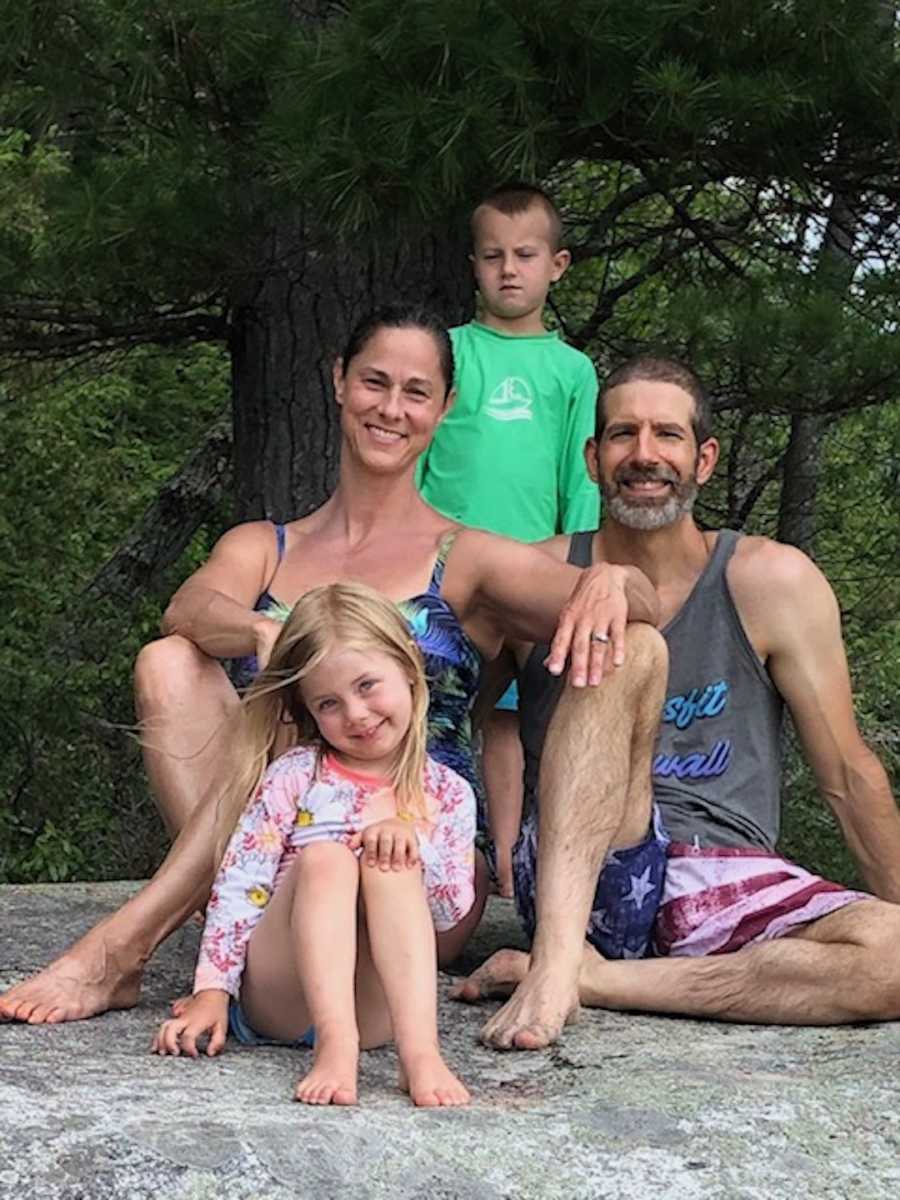
Today, this retired Olympian embraces her body as it is—tummy rolls, droopy mom boobs, and all. I feel healthier, happier, and more present than ever. I still mourn moments of my past strength and appearance, but I refuse to sacrifice my wellbeing for vanity.
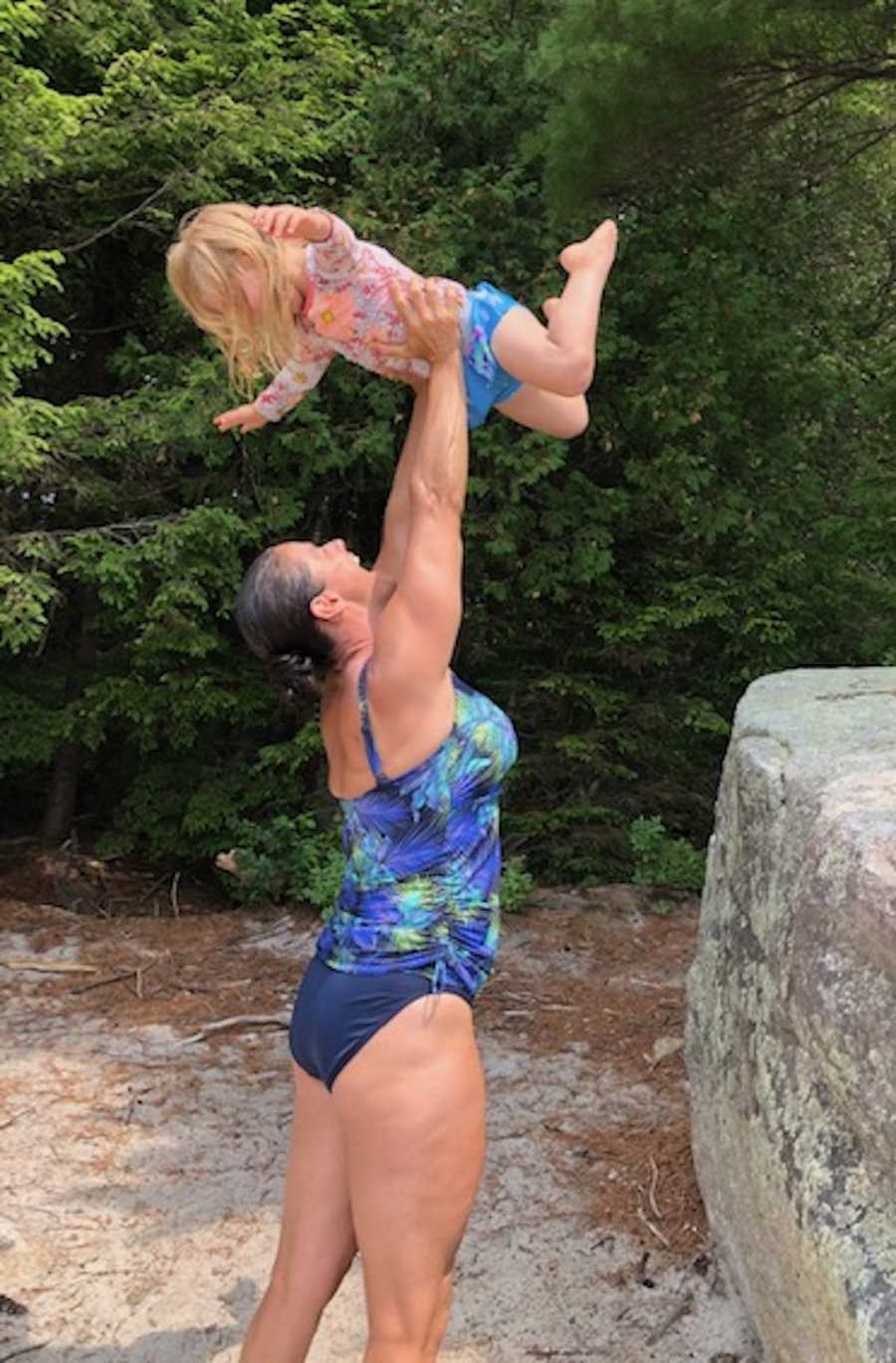
To all moms navigating postpartum life: let’s redefine health. Focus on nourishing your body, calming the chaos, moving with intention, and embracing the post-baby version of yourself. Your worth isn’t measured in abs or muscle tone. Growing a human changes everything—mind, body, and spirit—and that transformation is incredible. I hope to model this for my children, showing them that strength and capability extend far beyond appearance.
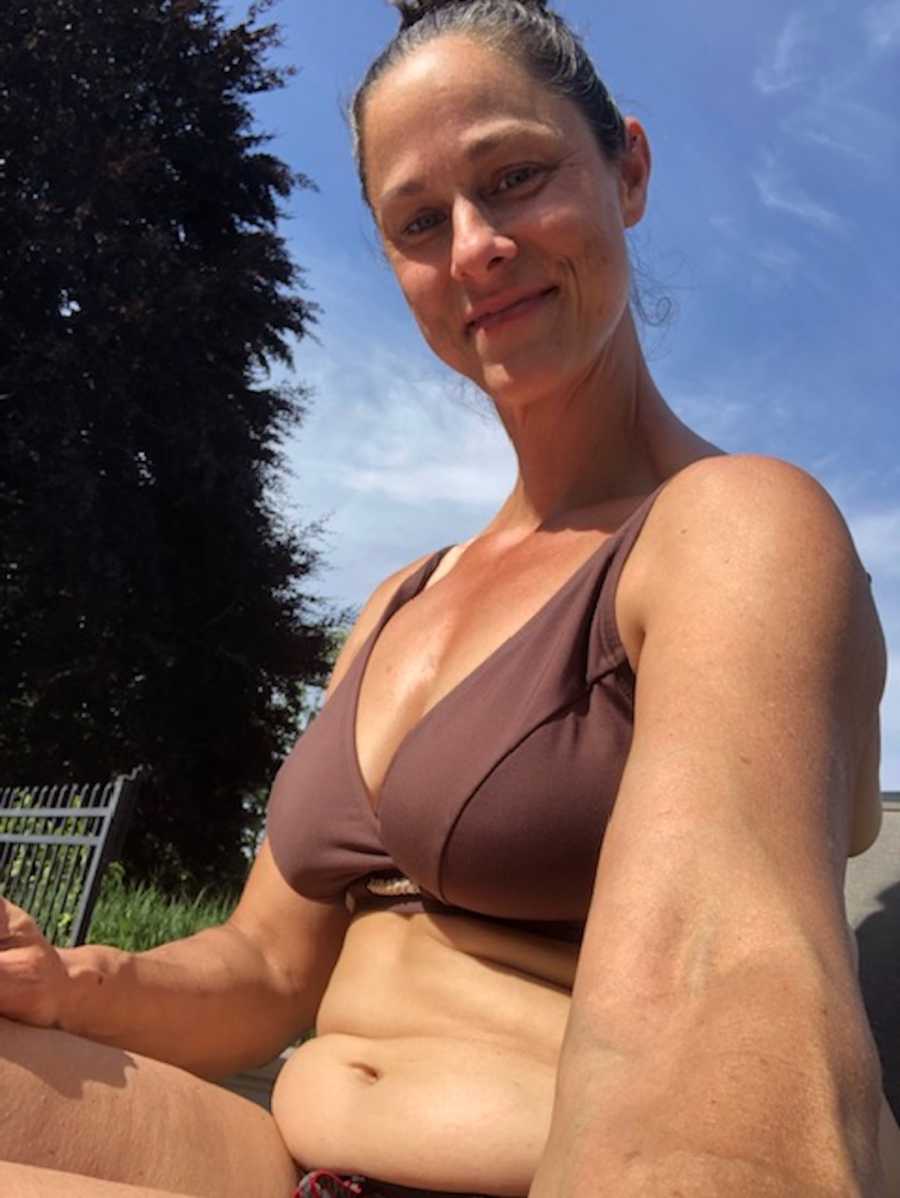
This is a new chapter, a new definition of health and self-love—and I can assure you, it has nothing to do with six-pack abs.